


Choosing between a white-label WordPress agency and a freelance WordPress developer shapes how your agency delivers work, manages clients, and grows over time.
Cost is usually the first thing agencies consider. However, reliability, accountability, and consistent delivery have a much greater impact on your agency’s reputation and client relationships in the long run.
TL;DR: White-Label WordPress Services
- A white-label agency delivers work under your brand while you manage the client relationship.
- Freelancers work well for one-off projects but struggle to support consistent, ongoing agency delivery.
- Hidden costs like rework, management time, and client churn make freelancers more expensive than their hourly rate suggests.
- A monthly retainer gives your agency predictable costs, reliable delivery, and room to scale without hiring in-house.
- WPTasks supports agencies with a subscription-based white-label model covering WordPress tasks, fixes, updates, site care, and hosting support.
What is a White-Label WordPress Agency?
A white-label agency handles WordPress development and maintenance on your behalf while you deliver everything under your own brand. Your clients only ever see your agency’s name on the work.

You get access to a dedicated team through a monthly subscription. That covers WordPress tasks, fixes, updates, site care, and hosting support. No recruiting, no onboarding, no managing full-time salaries. Just reliable delivery every month.
For agencies looking to grow their WordPress services without stretching their team, this is a practical and scalable way to do it.
What Does a Freelance WordPress Developer Actually Offer?
A freelance developer gives you flexibility. If you have a one-off project, a tight budget, or need a specific skill for a short period, hiring a freelancer makes sense. They are usually quick to onboard and straightforward to work with on smaller scopes.
But here is where it gets complicated. Your freelancer is juggling other clients too. When things get busy on their end, your project feels it. Response times slow down, availability becomes unpredictable, and if they suddenly become unavailable, you are left without a backup.
That works fine for a one-time build. But if your agency depends on consistent WordPress delivery for multiple clients every month, one person simply cannot carry that weight reliably.
How WPTasks Supports Your Agency as a White-Label WordPress Partner?
WPTasks offers agencies a subscription-based model with monthly development-hour retainers covering WordPress tasks, fixes, updates, site care, and hosting support. As a result, you get a dedicated team without the cost of hiring in-house developers.
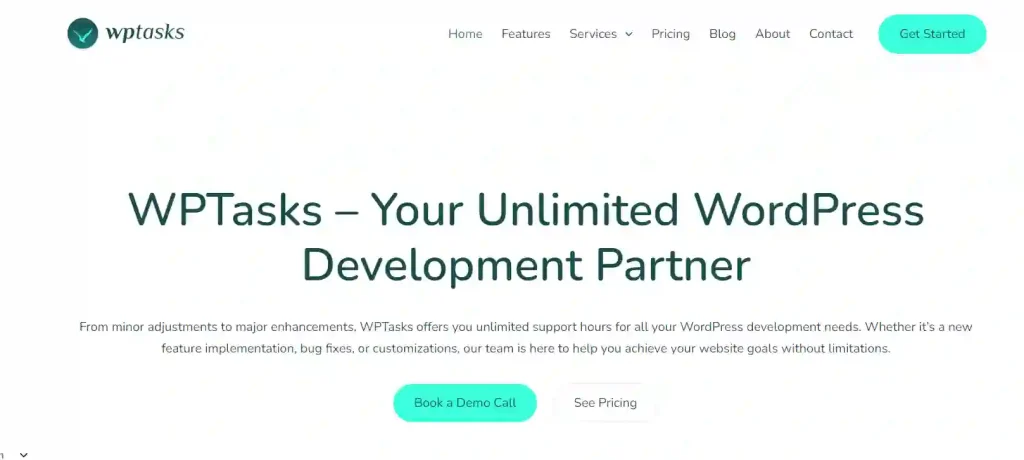
Everything delivers under your agency’s brand. Your clients see your name throughout every interaction and deliverable. Meanwhile, you stay in control of the client relationship, while WPTasks consistently handles the technical delivery every month.
As your agency grows, your retainer scales with it. Whether you manage five client sites or fifty, the same structured delivery process applies across every project. No gaps, no delays, and no starting over with a new team.
Ready to Deliver WordPress at Scale?
WPTasks gives your agency a white-label team, a monthly retainer, and consistent delivery under your brand.
White-Label Agency vs Freelancer: The Real Differences
Both options can deliver WordPress work, but they operate very differently day to day. Understanding these differences helps you choose what actually fits your agency.

Reliability and Accountability
A white-label agency gives you a full team behind every task. If one person becomes unavailable, another picks it up. Your deadlines stay on track and your clients never feel the disruption. That consistency builds trust with your clients over time.
A freelancer gives you one person. If they fall sick, get overloaded, or go quiet, your project waits. You have nobody to escalate to and no backup when things go wrong. For agencies managing multiple client projects simultaneously, that single point of failure carries serious consequences.
Scalability and Capacity
A white-label agency scales with your agency as it grows. You increase your retainer hours as client demand rises, with no hiring, no onboarding, and no delays. Whether you add two clients or twenty, your delivery capacity grows with you.
A freelancer runs at a fixed capacity. Once they hit their limit, you wait or find someone else. That creates gaps in delivery at exactly the moment your agency needs to perform. Neither option supports consistent growth across multiple client accounts every month.
Pricing and Predictability
A monthly retainer gives you a fixed cost you can plan around. You know exactly what you spend each month, making client pricing and profit margins easier to manage. This financial clarity helps your agency stay profitable as it scales.
Freelancers charge variable rates. Hourly costs shift between projects, rush fees appear when deadlines tighten, and scope creep produces unexpected invoices. Over several months, those unpredictable costs make it harder to price your services accurately and protect your margins.
Brand Consistency
A white-label agency delivers every piece of work under your brand. Your clients receive consistent quality, communication, and presentation across every project. Your agency looks professional and dependable regardless of what is happening on the delivery side.
A freelancer brings their own working style. That style shifts between projects and clients depending on their workload and priorities. When your agency reputation depends on consistent output, that variation creates real risk, especially with long-term clients who notice changes in quality.
Communication and Turnaround
A white-label agency follows defined processes. You know who to contact, how updates flow, and what turnaround times to expect. Your projects keep moving without you chasing for updates or waiting on responses that may or may not come.
A freelancer sets their own communication pace. Some respond quickly while others become hard to reach during busy periods. Without a structured process in place, managing that communication becomes another job for your team and another source of delay for your clients.
Quality Control
A white-label agency reviews work internally before it reaches you. That process catches errors early, maintains delivery standards, and ensures every project meets the same level of quality your clients expect from your agency.
When you hire a freelancer, quality control becomes your responsibility. You review the work, request revisions, and manage corrections yourself. That pulls your team away from higher value work and adds an extra layer of management that most agencies did not plan for when they brought a freelancer on board.
Read more: Pros and Cons of Hiring a WordPress SEO Freelancer for Your Website
When a Freelance Developer is a Practical Choice?
A freelance developer is a reasonable choice in specific situations. If you have a one-off project with a defined scope, a tight budget, or need a niche skill for a short period, a freelancer can get the job done without a long-term commitment.
Small agencies just starting out often benefit from freelancers too. When client volume is low and projects are straightforward, the flexibility of hiring per project makes financial sense. You pay for what you need and nothing more.
However, this works best when the project has a clear start and end point. Once ongoing support, regular updates, and consistent delivery enter the picture, the freelance model starts to show its limitations.
Why Growing Agencies Choose White-Label Over Freelance?
If your agency manages multiple WordPress clients, handles ongoing maintenance, or wants to grow its service offering without hiring in-house, a white-label agency is the stronger choice.
You get a dedicated team, a structured delivery process, and a fixed monthly cost that scales with your needs. Your clients receive consistent work under your brand every month without you managing the technical side yourself.
As your client base grows, so does your retainer. You stay focused on running your agency while a reliable partner handles the WordPress delivery. That is the kind of setup that supports long-term agency growth without the overhead of building an internal development team.
Read more: Professional White Label WordPress Development
The Hidden Costs Most Agencies Overlook
Comparing a freelancer’s hourly rate to a white-label retainer feels straightforward. However, the real cost of the wrong choice shows up in places you do not expect until you are already dealing with the consequences.

Cost of Mistakes and Rework
Every developer makes mistakes. What matters is who catches them and who fixes them. White label WordPress agencies deliver high quality results by employing skilled developers and expert developers who are proficient with leading page builders like Elementor.
Their specialized skills in website customization and development help ensure quality from the start, reducing the likelihood of mistakes and rework.
When a freelancer delivers work with issues, that falls on you. Your team identifies the problem, sends it back, waits for a fix, and reviews it again. That cycle can repeat multiple times on a single project. Those hours add up fast, and nobody is sending you an invoice for them.
Time Spent on Management
Hiring a freelancer does not remove management from your plate. You still write the briefs, answer questions, chase updates, review work, and keep the project moving. For ongoing WordPress work, that can easily consume several hours every week.
A white-label agency brings its own processes. You send the brief and receive the output. Your team stops spending time on project administration and starts focusing on work that actually grows your agency.
Reputation and Client Retention
When WordPress delivery is inconsistent, your clients notice. Slow turnarounds, missed updates, and recurring errors all reflect on your agency.
Your clients do not know who delivered the work. They only know it came from you. Delivering high-quality web design and ensuring a strong online presence for your clients is essential for retaining clients and protecting your agency’s reputation.
Losing one client due to poor delivery costs far more than any monthly retainer. Add up the lost recurring revenue, the time spent trying to recover the relationship, and the impact on referrals, and the true cost becomes very clear.
Opportunity Cost of the Wrong Choice
Every hour your team spends managing a freelancer, chasing updates, or fixing delivery issues is an hour you are not spending on growing your agency. That trade-off rarely comes up when agencies first compare hourly rates.
By outsourcing technical work to a white label WordPress agency partner, your agency can focus on growth and building stronger client relationships, while experts handle the specialized tasks.
A white-label retainer removes that drain completely. Your team focuses on higher value work because the technical delivery is already handled consistently every month.
Onboarding and Transition Costs
When a freelancer becomes unavailable or does not work out, you start over. You find someone new, brief them from scratch, and wait for them to get familiar with your clients’ sites and standards.
That transition takes time and creates delays your clients feel directly. With a white-label agency, the team stays consistent. Your clients’ history, preferences, and site details stay within the same partner relationship so nothing gets lost when circumstances change.
What to Look for in a White-Label WordPress Partner?
Not every white-label WordPress partner offers the same level of service, so check a few things before you sign up.
- Retainer Model: You want monthly development hour retainers with a clear scope covering WordPress tasks, fixes, updates, site care, and hosting support. Unclear terms cause problems later.
- Communication Standards: You need to know how updates are shared, what turnaround times look like, and how urgent issues get handled. A partner without clear processes adds the same stress as a freelancer.
- White-Label Delivery: Everything from communication to deliverables should carry your agency’s name. Your clients should never know who is doing the work.
- Scalability: As your client base expands, your partner needs to keep up without any drop in quality or capacity.
Conclusion
Choosing between a white-label WordPress agency and a freelancer comes down to what your agency actually needs long-term.
Freelancers work well in the right situations. However, as your client base grows and delivery demands increase, one person cannot consistently meet those expectations.
A white-label agency gives you structure, reliability, and scalability. Your clients receive consistent work under your brand every month, and your team stays focused on growing the agency rather than managing technical delivery.
For agencies serious about building a sustainable WordPress service, a white-label partnership is the more dependable path forward.
FAQs About White Label Agency
What is the difference between a white-label WordPress agency and a freelancer?
A white-label WP agency delivers work under your brand with a full team, structured processes, and a monthly retainer. A freelancer works independently on a project basis with no backup, no fixed process, and variable availability.
Can a freelancer handle ongoing WordPress maintenance for agency clients?
A freelancer can manage maintenance for a small number of sites, but availability and consistency become issues as your client base grows. One person handling multiple clients across different agencies rarely delivers the reliability ongoing maintenance requires.
Is white-label WordPress development worth the cost?
Yes, particularly for agencies managing multiple clients. The predictable monthly cost, consistent delivery, and time saved on management far outweigh the expense when compared to the hidden costs of freelancer-based delivery.
How do white-label WordPress agencies handle multiple client projects?
White-label agencies use structured delivery processes and dedicated teams to manage multiple projects simultaneously. Work is tracked, reviewed internally, and delivered under your agency’s brand without you needing to coordinate between different developers.
How does a monthly retainer model work with a white-label WordPress agency?
You subscribe to a set number of development hours each month. Those hours cover WordPress tasks, fixes, updates, site care, and hosting support. As your client base grows, you scale your retainer up without any hiring or onboarding process.


