
Seeing an HTTP 406 Not Acceptable error usually means the server cannot deliver a response in a format your browser accepts. This happens when request headers, MIME types, or content settings do not match what the server can provide.
In most cases, this error is triggered by client-side issues like incorrect headers or browser settings, but strict server rules, plugin conflicts, or configuration problems can also cause it. The good news is you can fix it quickly by adjusting request settings, checking server configurations, or reviewing recent changes.
TL;DR
- HTTP error 406 happens when the server cannot return content in a format the browser accepts.
- It is usually caused by mismatched request headers, MIME type conflicts, or strict security rules.
- Client-side issues such as incorrect headers, caching, or browser settings can trigger this error.
- Server-side problems such as mod_security, .htaccess rules, or misconfigurations are also common causes.
- You can fix it by adjusting Accept headers, checking MIME types, or updating server settings.
- Testing changes and keeping your server and CMS up to date help prevent this error in the future.
What is the HTTP 406 Not Acceptable Error?
The HTTP 406 error is a client error response code from the set of standard HTTP response status codes. It occurs when the server sends a response that doesn’t match any of the acceptable values specified in the client’s request headers (e.g., a browser or app).
In simple terms, the requested resource exists, but the server side can’t deliver it in a format the client can process.

Unlike other client error responses like 404 (resource not found) or 403 (forbidden), or considered server error responses like 500 (internal server error), the 406 error is specific to content negotiation. It usually means the server can’t provide an appropriate representation in response to the client’s request.
Discover: How to Fix Google Not Working Issues
Why Does the 406 Not Acceptable Error Happen?
Several factors can trigger this HTTP error, often involving negotiation between the client and the server. Key causes include:
- Mismatch in Accept headers: The server can’t deliver a resource in the format specified by the Accept-Language, Accept-Charset, or Accept-Encoding headers.
- MIME type conflict: Requested and served content types don’t align.
- Mod_security rules: Strict server-side firewalls may block certain content types or patterns.
- User-agent restrictions: Some servers filter requests based on the client’s browser, such as Internet Explorer, or on specific bots.
- Custom .htaccess settings: Overly strict rules can interfere with the server’s ability to send data appropriately.
- Other extensions and plugins: Especially on WordPress, many WordPress extensions may alter headers or output, resulting in related errors.
We’ve personally encountered such issues when trying to modify database records, operate across specific domains, or when changes occur on common platforms due to updates or misconfigurations.
How WPTasks Can Help Fix and Prevent This Issue?
Errors like this can recur if the root cause is not properly addressed. You need consistent support to keep your site stable and error-free.
WPTasks helps you resolve issues quickly and prevent them in the long term. With monthly development hour retainers, you get dedicated time for fixes and improvements. A monthly maintenance subscription keeps your site up to date, monitored, and protected against recurring errors.
Our team also handles plugin conflicts, configuration issues, and provides hosting support when needed. For agencies, everything works as a white-label service, so you can deliver reliable support under your own brand.
Fix WordPress Errors Before They Turn Visitors Away
Get expert help to troubleshoot stubborn website issues, restore stability, and keep your WordPress site running the way it should.
How to Diagnose the HTTP 406 Not Acceptable Error?
Troubleshooting this client-side error involves inspecting both the request and the server response. Here’s how:
- Browser Developer Tools: Use the Network tab to examine the request included, especially the headers related to Accept, Accept-Language, Accept-Charset, and Accept-Encoding.
- Check Server Logs: Investigate your server-side logs for potential fixes and look for any misconfigured MIME types or rules that may be causing the error message.
- Replicate the Request: Use online tools such as cURL, Postman, or header inspection services to simulate the request on the same network or a different wireless network to rule out ISP or local issues.
- Inspect MIME Types: Ensure the content types your server delivers match those your app or browser accepts.
- Revert Alterations: If the error occurred after installing or updating a plugin or extension, roll back the changes, or restore a full or manual backup if available.
- Review Other Components: Examine your theme, other extensions, and even your PHP code for changes that may affect content negotiation.
If the issue persists across scenarios multiple times, even on bug-free environments, it may be worth contacting your hosting provider to rule out broader server-side causes.
How to Fix HTTP 406 Error?
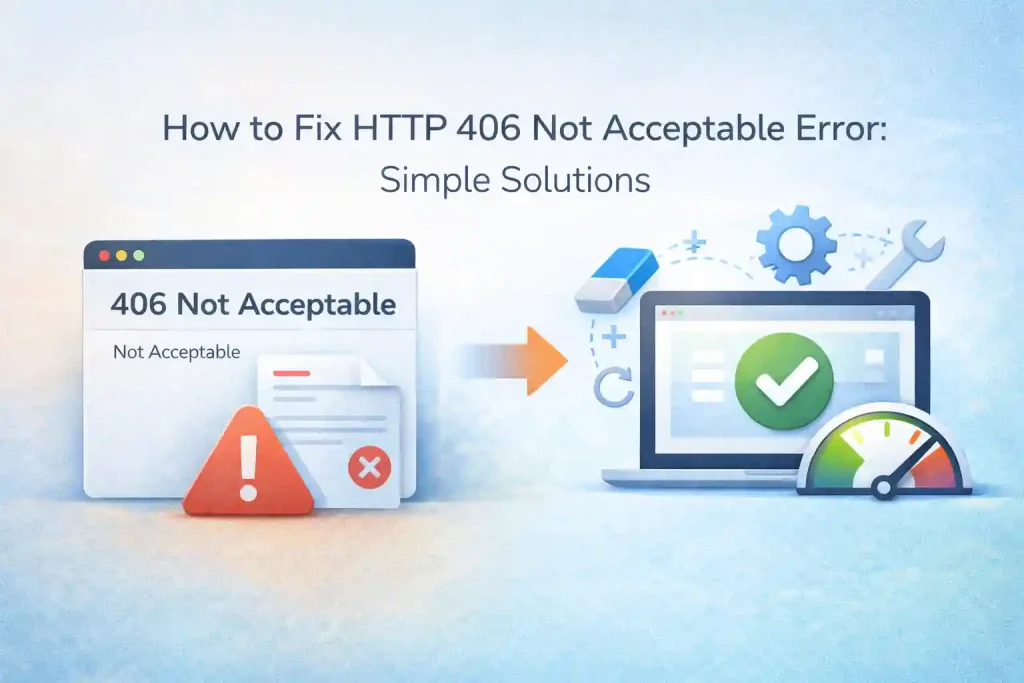
Dealing with a 406 error can be frustrating, but the good news is that there are several simple and effective ways to resolve it.
Fix 406 Error by Updating Accept Headers
One of the most common reasons for a 406 error is a mismatch between the client’s request and the server’s response. The client’s request typically includes headers like Accept, which tell the server what content types it can process, such as HTML, JSON, or XML.
If the requested resource isn’t available in a format the server can provide, this error occurs. You can fix this by adjusting the request headers to include more broadly acceptable values. This ensures that the server has more flexibility in delivering content. This is especially useful in scenarios involving specific domains, different web browsers, or requests made over a wireless network.
Disable or Tweak mod_security Rules
Mod_security is a firewall module installed on many Apache servers to block malicious traffic. However, in such scenarios, it can mistakenly block valid requests that appear unusual, leading to client error responses such as the 406 error.
To resolve this, you can either disable mod_security temporarily or tweak its rules. You may need to work with your hosting provider to adjust these settings. Be cautious, though, turning off mod_security can expose your CMS dashboard, core WordPress files, and other components to vulnerabilities, so it should only be done with proper manual backups or automated backups in place.
Update the .htaccess File
The .htaccess file is used by many common software packages, such as WordPress, to manage redirects, content negotiation, and MIME types. Sometimes, overly strict rules in this file can prevent the server from responding with the correct acceptable values, resulting in a 406 error.
By reviewing and updating the .htaccess file, you can ensure that it allows the correct content types and doesn’t block any valid requests. If you’ve personally encountered this issue after recent changes or plugin updates, reverting the file to a previous version or cleaning up restrictive rules may help resolve the HTTP error.
Check for Server-Side MIME Type Issues
Another potential issue lies in how the server handles MIME types, which define the type of data being sent (like plain text, JSON, or HTML). If the server is not properly configured to deliver the requested MIME types, the request may be rejected with a 406 error.
To fix this, make sure your server is configured to handle the file types and formats your website or web application uses. In some cases, especially with common platforms or custom setups, the configuration may need to be updated. Problems with MIME types can occur after server changes, plugin installations, or unexpected database alterations.
Contact Hosting Provider or Server Admin
If the issue persists after following the steps above, it may be time to contact your hosting provider or server administrator. This is especially important if you’ve exhausted all other potential fixes, or if the issue is affecting multiple sites on the same network.
When reaching out, provide detailed information, including the error message, any recent changes made to your site, and relevant data from your server-side logs.
Also include details about the request included, such as the headers and content types involved. This will help them pinpoint whether the issue lies in the server configuration, PHP code, or in interactions between WordPress and other extensions installed on your site.
Check Out: WordPress Management Guide
How to Prevent 406 Errors and Keep Your Site Running Smoothly?
Preventing the HTTP 406 Not Acceptable error starts with understanding how content negotiation works between the client and the server. This error occurs when the server is unable to deliver a response that matches the client’s requirements specified in headers such as Accept, Accept-Language, Accept-Encoding, and Accept-Ranges.
Here are a few practical ways to avoid such issues:
Use Proper Content Negotiation Practices
Ensure your web applications or APIs return JSON, HTML, or XML. Avoid relying on strict or unusual content types unless absolutely necessary. If your application includes the Accept-Ranges or similar headers, confirm they serve the same purpose across browsers and devices.
Avoid Overly Strict Security Settings Without Testing
Security tools like mod_security, while helpful, can sometimes block legitimate requests and trigger client-side errors, such as 406. Always test these settings thoroughly before applying them across production environments. Such cases are common when working with shared hosting or custom .htaccess rules.
Regularly Test New Pages and Endpoints
When launching new pages, APIs, or features, test them under different conditions and across multiple devices, browsers, and user agents. This helps identify and fix content negotiation issues early. Tools like browser developer consoles or API testing platforms can help simulate different request headers and response-matching scenarios.
Keep Server Configurations and CMS Up to Date
Running outdated web server configurations or older versions of your content management system can lead to compatibility issues and malformed headers. Stay current with updates to your CMS, WordPress extensions, or any server software to prevent future client error responses. This also ensures that settings related to accept ranges and MIME types are handled correctly.
Taking these steps not only prevents 406 errors but also improves site stability and performance for users accessing your requested resources from different locations and devices.
Conclusion
The HTTP 406 Not Acceptable error can block users from accessing your content even when everything seems to be working fine. It usually comes down to a mismatch between what the browser requests and what the server delivers.
The fix is often simple once you identify the root cause. Small changes, such as updating headers, reviewing server rules, or checking recent plugin updates, can quickly resolve the issue. If you stay proactive with testing and avoid overly strict configurations, you can prevent this error from affecting your site again and keep your user experience smooth.
FAQs About 406 Error
How can I fix a 406 error on my website?
Start by checking request headers, clearing your browser cache, and reviewing server security rules. In many cases, adjusting content types or disabling strict filters resolves the issue.
What causes the HTTP 406 Not Acceptable error?
It is caused by mismatched request headers, unsupported content types, strict mod_security rules, or server misconfigurations.
Is the HTTP 406 error a client-side or server-side issue?
It is a client error, but it usually happens due to server configuration or security restrictions.
Can API requests cause a 406 Not Acceptable error?
Yes, if the request headers do not match the API’s supported formats, the server returns a 406 error.
How do I prevent HTTP 406 errors in the future?
Use standard content types, avoid overly strict security rules, test changes before going live, and keep your server up to date.